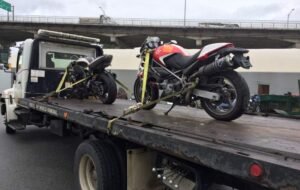
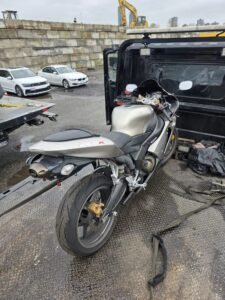
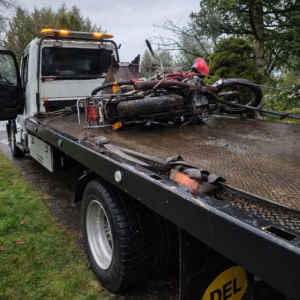
When ICBC declares a bike a total loss, it usually keeps the bike and pays out the claim, so you won't have it to sell. We come in when the bike is still yours: you didn't claim, the damage wasn't covered, or the repair quote came back higher than you want to spend.
If you're not sure who owns the bike after a claim, ask your adjuster before you call us.
Cosmetic damage matters less than most people expect. Scraped plastics and bent levers are common. Frame damage, a cracked engine case or a bike that's been stripped for parts lowers the number more. Photos of the damaged side help us give you a solid offer quickly.
Before pickup, take off anything you want to keep that isn't part of the bike, like a tank bag or phone mount. If you've removed parts such as an aftermarket exhaust, tell us, since it changes the offer. A bike that won't start as well? See non-running motorcycles.
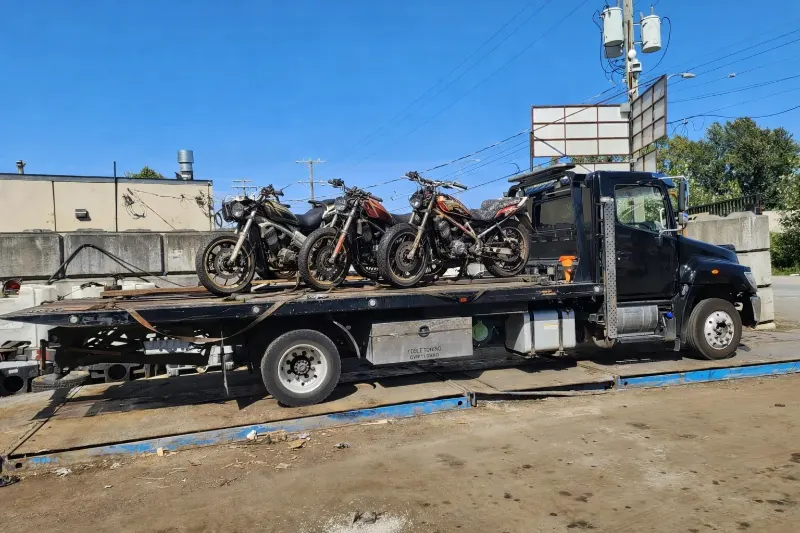
Bent forks, a cracked frame or a twisted subframe usually mean a bike is no longer worth repairing. That's exactly the kind of bike we buy. Tell us what you can see: bent bars, broken pegs, a cracked tank, a pushed-in front wheel. Photos help if you have them.
When ICBC declares a vehicle a total loss, it usually pays out the claim and keeps the vehicle, so you may not own it anymore. If you're not sure where your claim stands, check with your adjuster before you sell anything. If ICBC let you keep it, you can sell it to us like any other bike.
Bikes that have been in a fire or under water usually aren't worth fixing. Water gets into the wiring, the engine and the bearings. We still buy them, and we load them so nothing leaks out on the way.
A crashed bike can leak oil, coolant or fuel. If it's dripping, put a tray or some cardboard under it and keep it away from anything that sparks. Tell us when you book, so the driver is ready for it.
The paperwork is the same as any sale: the registration signed by every owner, photo ID, and ICBC's Transfer/Tax Form, which you sign once you're paid. ICBC's selling a used vehicle page has the full steps. Keep your plate.
Usually not. Cosmetic fixes on a crashed bike rarely add as much value as they cost. If the damage is light and you'd ride it again, a repair shop estimate tells you whether it's worth it. If not, sell it as it is.
Yes. Frame damage lowers the value, but we still make offers on those bikes.
Only if you still own it. ICBC usually keeps total-loss vehicles, so check with your adjuster first.
No. You won't get back what you spend. Sell it as it is.
Often, yes. Tell us what happened and send photos so we can take a look.
Often, yes. Tell us where it is and who has it. You may need to pay any storage owing first and give the shop or yard written permission for us to collect it. We confirm all of that with you before sending a truck, so nobody makes a wasted trip.
We buy the motorcycle, not the gear. Helmets, jackets and airbag vests stay with you. If ICBC is handling a claim for damaged gear, that is separate from selling us the bike itself, and it does not change the paperwork for the bike.
Call with the year, make and model and we'll give you a number.