When a motorcycle is damaged, non-running, old, or simply no longer wanted, current photos can make the first removal conversation much clearer. A bike may be stored in a garage, parked behind a home, kept in a parking area, or sitting on another Lower Mainland property. Before you call, a few straightforward pictures and facts can help describe the situation accurately. Motorcycle Removal serves Vancouver and surrounding Lower Mainland communities. To discuss an unwanted motorcycle, call (236) 239-0420. Call (236) 239-0420 to discuss your vehicle.
Take photos that show the motorcycle as it is today
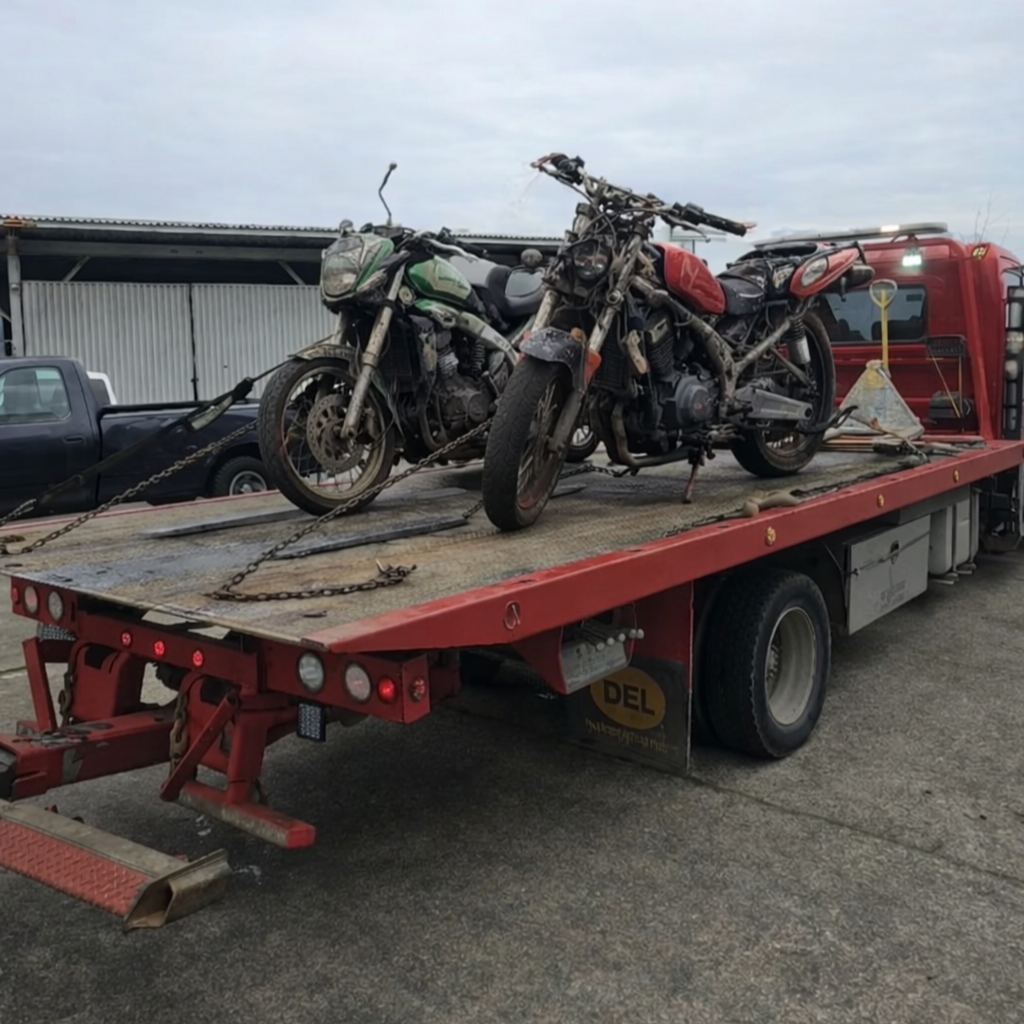
Start with wide photos of both sides of the motorcycle, then take a picture of the front and rear. If there is visible crash damage, a flat tire, missing bodywork, rust, or a part that is clearly not in place, include a photo of that area. The goal is not to diagnose the motorcycle or decide what it may be worth. It is to make sure the first discussion begins with a truthful view of the bike’s current condition.
If the motorcycle has been parked for months or years, an old sale listing may no longer be useful. Fresh photos can show whether the bike is covered, whether it is accessible, and whether it is near other vehicles or equipment. They can also help you remember details you might otherwise leave out during a phone call.
Photograph the location as well as the bike
A wide photograph of the surrounding space can be useful when the motorcycle is in a garage, at the back of a driveway, in an apartment parking area, behind a gate, or at a commercial property. It is not necessary to decide for yourself whether the area is simple or difficult to access. A clear picture and an honest explanation give the business better context for your question.
Pair the photos with basic motorcycle facts
Alongside the photos, write down the year, make, model, and any details you know. Tell the business if the motorcycle starts, whether you have keys, and whether it has been damaged or stored for a long time. If you do not know why it stopped running, say that clearly. It is better to describe an unknown mechanical issue honestly than to guess about the engine, battery, electrical system, fuel system, or transmission.
Motorcycle Removal describes inquiries involving used, scrap, non-running, damaged, junk, old, accident-damaged, broken, and unwanted motorcycles. Your bike may match one of those descriptions, but every inquiry should still be based on the facts of that particular motorcycle. Do not assume that a general website statement guarantees a specific outcome for your own bike.
It can also help to note whether the motorcycle is standing upright, covered, locked, or stored near a wall or other property. If you need to move another item before access is possible, mention that rather than trying to reposition the motorcycle yourself. The most useful preparation is simply an accurate record of the motorcycle and the space around it.
Keep ownership information nearby
Before calling, remove personal items from storage compartments and collect the documents you have for the motorcycle. Check for keys, registration paperwork, insurance papers, garage remotes, tools, riding gear, or other belongings you want to keep. If you are missing documents or the motorcycle is connected to another owner or an estate, explain that situation directly. Requirements can depend on the circumstances, so it is important to ask rather than presume.
Describe the Lower Mainland location accurately
Motorcycle Removal identifies Vancouver and surrounding Lower Mainland service areas, including Burnaby, Richmond, Surrey, Maple Ridge, Abbotsford, Mission, and Whistler. Give the city, street address, and a short explanation of where the motorcycle is parked. If a property manager, tenant, family member, or building contact needs to provide access, mention that early in the conversation.
Location details are especially helpful if the motorcycle is in a shared parkade, storage area, backyard, side yard, or other space with a gate or limited turning room. You do not need to promise that access is available at a certain time. Instead, tell the business what you know and ask what details would be helpful before arranging anything further.
Ask questions that fit the actual motorcycle
Once you have photos and basic facts, you can ask practical questions about what information is useful for a motorcycle removal inquiry. For example, ask whether additional photographs would help, whether the description of the parking location is sufficient, or what ownership information may be needed. A clear discussion is more reliable than relying on assumed timing, pickup, or value.
Avoid overpromising in your own description
It can be tempting to minimize damage or describe a motorcycle as running when you are uncertain. That usually makes the conversation less useful. Explain the condition as accurately as you can and include current images that match your description. Honest details allow the discussion to focus on the right next step for the bike and its location.
Contact Motorcycle Removal
Motorcycle Removal focuses on buying unwanted motorcycles and does not sell used parts. If you have a used, scrap, non-running, damaged, old, broken, or unwanted motorcycle in Vancouver or the Lower Mainland, take current photos and collect the basic details first. Then call (236) 239-0420 to discuss your situation.
A few accurate photos, a simple condition description, and the exact location give you a better starting point. For a motorcycle inquiry in Vancouver, Burnaby, Richmond, Surrey, Maple Ridge, Abbotsford, Mission, Whistler, or another nearby Lower Mainland area, call Motorcycle Removal at (236) 239-0420.